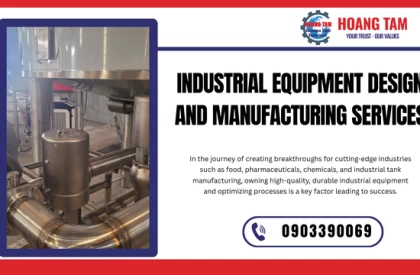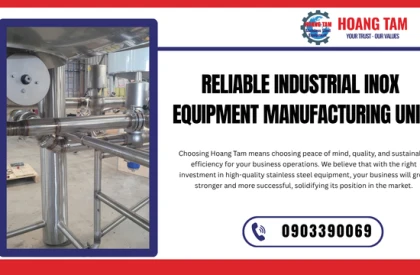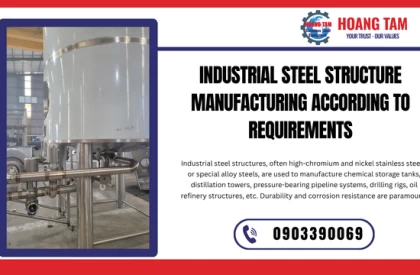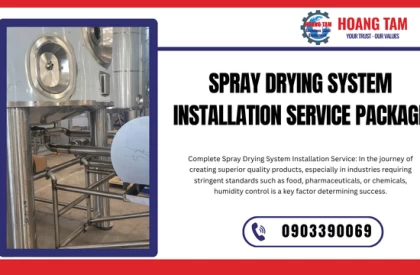


In today's modern industrial world, where every small detail can make a huge difference in product quality and operational efficiency, owning a standard-compliant tank system is an urgent requirement. Especially for industries such as food, pharmaceuticals, and chemicals, where purity and safety are vital, the fabrication of stainless steel tanks is not just about creating a container, but rather a strategic investment that ensures sustainable performance and strict adherence to regulations.
A standard-compliant stainless steel tank is more than just a block of stainless steel. It is the result of a deep understanding of materials, sophisticated design processes, advanced fabrication technology, and rigorous quality inspection. It serves as the "heart" of many production processes, where valuable raw materials are stored, mixed, or reacted under the most ideal conditions. So, how can your business confidently place its trust in truly "standard-compliant" stainless steel tank solutions?
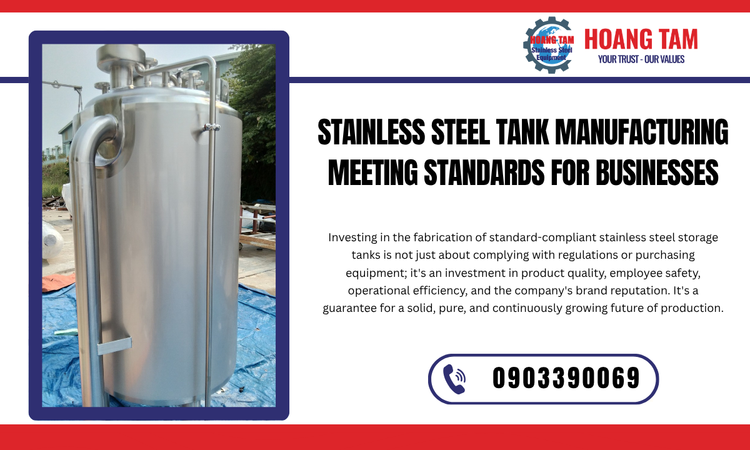
The Power of Standard-Compliant Stainless Steel: Beyond Durability
Stainless steel, or "inox" as it's often called, has long been an indispensable material in many industries due to its superior characteristics: outstanding corrosion resistance, ease of cleaning, high durability, and aesthetic appeal. However, the concept of being "standard-compliant" elevates these benefits to a new level. It's not just about using 304 or 316L stainless steel, but rather the synergy of multiple factors:
- Chemical compatibility: Ensuring the stainless steel material does not react with chemicals, food, or pharmaceutical ingredients contained within, preventing alteration of properties or contamination.
- Absolute hygienic safety: Especially crucial for the food and pharmaceutical industries. The tank surface must be specially polished (e.g., mirror polished), free of crevices or rough welds, to prevent the accumulation of bacteria and pathogens.
- High pressure and temperature resistance: Ensuring safety in production processes with strict pressure and temperature requirements, or when sterilization with hot steam is needed.
- Regulatory compliance: Adherence to international standards such as GMP (Good Manufacturing Practices), FDA (U.S. Food and Drug Administration), or domestic food and pharmaceutical safety standards.
Standard-Compliant Stainless Steel Tank Fabrication Process: From Concept to Execution
Creating a truly "standard-compliant" stainless steel tank is not a simple task. It requires a comprehensive, systematic process that combines experience, expertise, and modern technology.
Technical Consulting & In-depth Solution Design
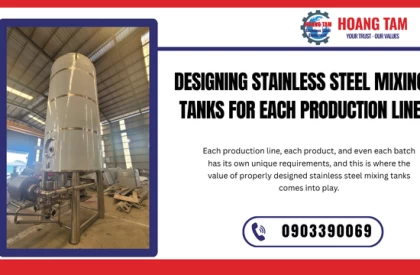
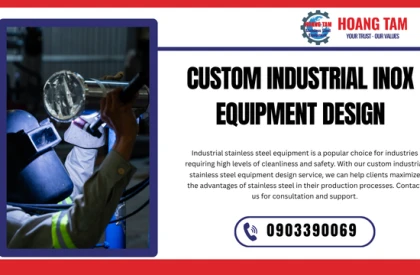
This is a critical starting point where ideas are shaped into detailed blueprints. Experts will collaborate with the business to thoroughly understand its needs, product characteristics, operational processes, and the standards the tank must meet. From this, a precise 3D design will be developed, optimized for functionality, materials, and cost. Every small detail, from tank wall thickness, type of stainless steel, position of connection ports, agitation systems, heating/cooling jackets, to surface finish, is meticulously calculated.
Selection of High-Quality Stainless Steel Materials
Selecting the correct type of stainless steel is a crucial factor. Stainless steel 304 is commonly used for general food and beverage applications. Stainless steel 316L, however, is the preferred choice for pharmaceuticals, highly corrosive chemicals, or environments requiring special acid resistance, thanks to its low carbon content which minimizes weld corrosion. The origin of the material must be clear and accompanied by full quality certificates.
Modern Fabrication & Manufacturing Technology

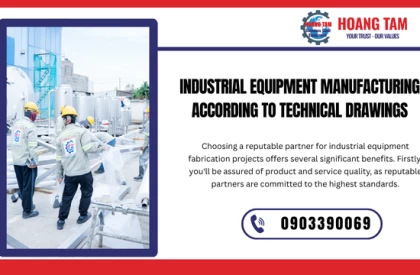
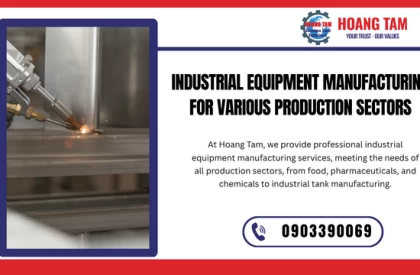
Directly forming and assembling the tanks. TIG or MIG/MAG welding technology with shielding gas is a decisive factor in weld quality, not only for durability but also for aesthetics and hygiene. Welds must be smooth, free of burrs, and without porosity to prevent bacterial growth. Laser cutting machines, bending machines, and CNC plate rolling machines ensure absolute precision, minimizing errors during the manufacturing process. Furthermore, surface treatment, from mirror finishing for pharmaceutical tanks to satin finishing for industrial tanks, requires skilled technicians.
Rigorous Quality Inspection
Each tank, upon completion, must undergo a series of stringent tests: weld leak checks using hydraulic or pneumatic pressure testing, X-ray inspection to detect internal weld defects, material thickness verification, geometric dimension checks, and surface roughness assessment. This process ensures that the tank not only meets technical standards but also guarantees absolute safety during operation.
Professional Stainless Steel Tank Fabrication Partner: The Key to Success
Given the critical importance of stainless steel tanks, selecting a reputable and truly capable fabrication partner is a decisive factor in a project's success. A comprehensive solution provider offers businesses more than just a product:
- Technical consulting & Solution design: They don't just take orders; they partner with businesses to find the most optimal solutions.
- Fabrication & Manufacturing: Ensuring product quality from materials to production technology.
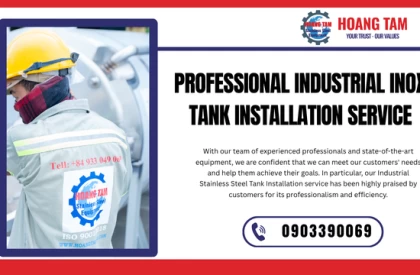
- Installation & Construction: A team of skilled technicians ensures a smooth and technically correct installation process on-site.
- Maintenance & Servicing: Providing after-sales services to extend equipment lifespan and performance.
- Project support & On-site construction: Flexibly meeting the specific requirements of each project, including direct construction at the client's location.
Investing in standard-compliant stainless steel tank fabrication is not merely about regulatory compliance or equipment procurement; it's an investment in product quality, employee safety, operational efficiency, and the enterprise's brand reputation. It ensures a stable, pure, and continuously developing manufacturing future.
With a long-term vision, choose a partner with experience, modern technology, and a commitment to quality to transform challenges into opportunities and together build sustainable values for Vietnam's industry.
Hoang Tam
Address: Lot L1, Street 8, Le Minh Xuan Industrial Park, Tan Nhut Commune, Ho Chi Minh City, Vietnam
Hotline: 0903390069
Phone: 0933 049 069
Email: contact@hoangtamsse.com
Website: hoangtamsse.com