In the journey of building robust structures and optimizing industrial solutions, materials always play a crucial role. Alongside stainless steel, which has already established its position, another option is gradually gaining favor due to its outstanding advantages, especially in environments requiring high resistance to corrosive chemicals: composite tanks, also known as fiber glass tanks. This article will delve deeper into this material, its diverse applications, and why it has become a reliable solution for many industries, from food and pharmaceuticals to chemicals.
Before diving into applications, let's understand what fiber glass tanks are. As the name suggests, they are formed from the intelligent combination of fiberglass and composite resin (typically polyester, vinyl ester, or epoxy resin). Fiberglass acts as the reinforcing material, providing superior mechanical strength and rigidity, while the resin serves as the binder, protector, and structural former. This fusion creates a material that is lighter than metal yet possesses excellent load-bearing, heat resistance, and especially chemical resistance capabilities.
Unlike metals that can corrode over time, the molecular structure of composite resin, especially when reinforced with fiberglass, creates an effective barrier against the ingress of harmful substances. This makes fiber glass tanks an ideal choice for storing:
Stainless steel (inox) has long been a familiar companion in clean industries like food and pharmaceuticals due to its hygiene, ease of cleaning, and a certain level of corrosion resistance. However, when faced with highly corrosive chemicals, large concentrations, or harsh environments, stainless steel can show its limitations. This is when fiber glass tanks shine with their superior chemical resistance, potentially competitive initial cost, and significantly lighter weight, reducing structural load on the facility.
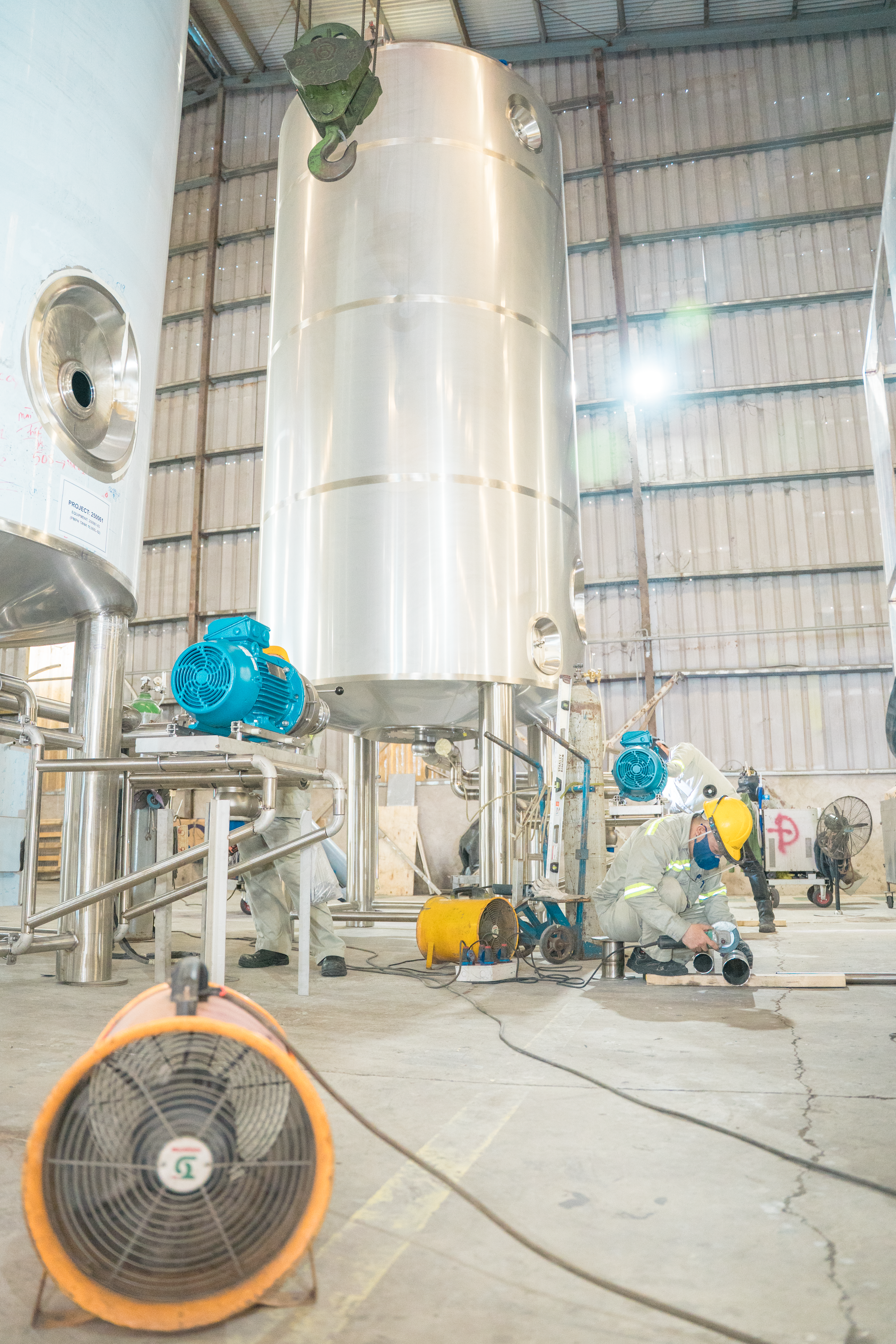
The flexibility in design and high customizability allow fiber glass tanks to meet the needs of various sectors, offering effective and safe storage solutions.
This is the sector where fiber glass tanks truly demonstrate their strength. Excellent resistance to sulfuric acid, hydrochloric acid, bleach, ammonia, and countless other corrosive chemicals ensures absolute safety for products and the environment. Composite tanks can be designed with special liners tailored to specific chemicals, ensuring no adverse reactions occur.
While stainless steel still holds dominance, fiber glass tanks also find their place in this industry, particularly for storing mildly acidic solutions or fermented products. The smooth, non-porous composite surface prevents bacterial growth, is easy to clean, and meets food safety standards. They are commonly used for storing:

Similar to the food industry, the requirements for purity and chemical resistance are extremely important. Fiber glass tanks are used for storing solvents and intermediate chemicals in pharmaceutical manufacturing processes, or for storing purified water and distilled water. The composite resin layer does not leach harmful substances, ensuring the integrity of the product.
Wastewater from factories and plants often contains a high concentration of impurities, toxic chemicals, and is highly corrosive. Fiber glass tanks are an optimal choice for constructing storage tanks, sedimentation tanks, and treatment tanks in these systems. They can withstand harsh environments, extending the lifespan of wastewater treatment facilities.
Additionally, fiber glass tanks are applied in the mining industry (for storing ore flotation chemicals), the agricultural sector (for liquid fertilizer tanks), the textile and dyeing industry (for storing bleaching and dyeing chemicals), and even in fire protection systems for water storage.

At Hoang Tam, we understand that every project is unique. With extensive experience in providing solutions and fabricating stainless steel equipment, we have expanded our capabilities to produce and supply high-quality fiber glass tanks that meet diverse customer technical requirements.
Our team of engineers will work closely with you to understand your needs, operating environment, and the type of chemicals to be stored. Based on this, we will recommend the most suitable composite material (type of resin, fiberglass, additives if needed) and design the tank with optimal dimensions, shape, and accessories (manways, vents, flanges, ladders, mixing systems, etc.) for each specific application.
Hoang Tam employs advanced fabrication technologies such as:
Hoang Tam's manufacturing process always adheres to strict technical standards, from raw material selection to each reinforced layer of fiber and resin, ensuring that every fiber glass tanks shipped meets the highest quality standards.
Each product undergoes a stringent quality inspection process before delivery, including visual inspection, dimension measurement, pressure testing (if required), and strength and chemical resistance testing. We are committed to providing absolute peace of mind to our valued customers.
Investing in fiber glass tanks from Hoang Tam is not just buying a product; it is investing in a comprehensive solution that brings numerous practical benefits:
With a commitment to providing sustainable and efficient industrial solutions, Hoang Tam is proud to be a trusted partner in supplying high-quality fiber glass tanks. We are always ready to listen and accompany our customers on every step of their development journey.
Lot L1, Street No. 8, Le Minh Xuan Industrial Zone, Tan Nhut Commune, Ho Chi Minh City, Vietnam
Lot L1, Street No. 8, Le Minh Xuan Industrial Zone, Tan Nhut Commune, Ho Chi Minh City, Vietnam