

In the ceaseless rhythm of modern industries, from food and pharmaceuticals to chemicals and tank manufacturing, lies a meticulous journey behind every quality product and seamless operation: the journey of Fabrication & Manufacturing. This is not merely about transforming raw metal sheets into specific shapes, but an art combining technical precision, creative vision, and practical experience. It demands millimeter-level meticulousness, a deep understanding of materials and processes, especially with stainless steel, the heart of many production systems requiring superior hygiene and durability.
Stainless Steel Fabrication & Manufacturing: From Raw Material to Perfect Product
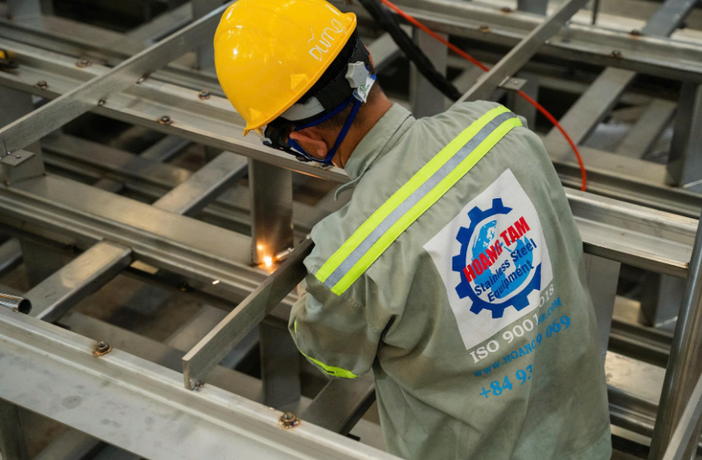
Stainless steel has become the top choice for countless industrial applications due to its excellent corrosion resistance, high durability, and ideal hygienic properties. However, to fully leverage these advantages, the fabrication and manufacturing process must adhere to strict standards and require a certain level of expertise. From flat stainless steel sheets, through the hands and minds of engineers and skilled workers, combined with modern machinery, they are gradually shaped into massive pressure vessels, complex piping systems, or specialized production equipment. Every cut, every weld, every finishing step determines the final quality of the product – a piece of equipment that is not only durable but also ensures absolute safety, especially when serving industries with stringent hygiene requirements like food and pharmaceuticals.
The Irreplaceable Importance of Precise Fabrication & Manufacturing
Precision in fabrication and manufacturing is not an option, but a mandatory requirement, especially when working with stainless steel for critical industries.
Ensuring Absolute Safety & Hygiene
For the food, pharmaceutical, or even chemical industries, any minor error in stainless steel fabrication can lead to serious consequences. Uneven welds or improperly polished surfaces can create "dead spots" where bacteria can easily thrive and multiply, contaminating products. A tiny crack can cause leakage of hazardous chemicals. Therefore, the Fabrication & Manufacturing process must ensure:
- Product contact surfaces are smooth, easy to clean, without gaps or blunt edges.
- Welds are strong, seamless, capable of withstanding pressure, and do not create small crevices.
- Optimal design to minimize dead space, ensure continuous flow, and prevent residue buildup.
The quality of fabrication directly impacts consumer health, product purity, and compliance with international safety and hygiene standards like GMP.
Optimizing Operational Efficiency & Equipment Lifespan
A precisely fabricated piece of equipment is not only safe but also operates much more efficiently. Technical specifications such as volume, pressure, temperature, or flow rate will be met according to design, optimizing the production process. For instance, in the manufacturing of industrial tanks, accuracy in capacity, connection port positions, or bottom flatness directly affects mixing, discharge, and cleaning capabilities. A carefully fabricated piping system will reduce pressure loss, optimize flow rates, and extend the lifespan of the entire system by minimizing stress points and the risk of localized corrosion.
Meeting Stringent Technical Requirements
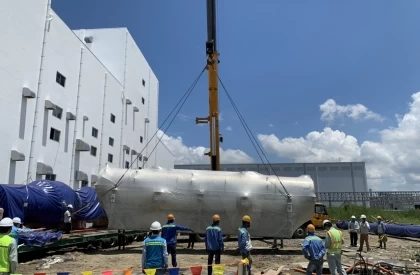
Each industrial project has unique technical requirements and specific characteristics. From the massive dimensions of chemical reaction vessels, the complexity of gas pipeline systems, to the exquisite precision of equipment in pharmaceutical cleanrooms. The Fabrication & Manufacturing process must be capable of "transforming" detailed, sometimes highly complex, technical drawings into complete physical products, meeting all specifications, materials, and permissible tolerances. This is a significant challenge that requires flexibility, experience, and superior capability.
Foundational Steps in the Fabrication & Manufacturing Process
To achieve the highest quality, the fabrication and manufacturing process is typically carried out through several closely coordinated steps.
Technical Consultation & Solution Design
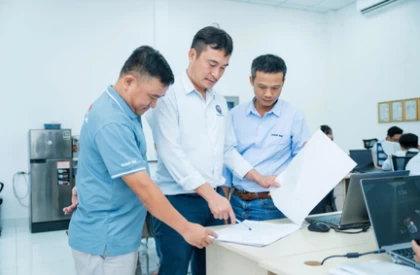
Every journey begins with an idea, a need. The technical consultation phase plays a crucial role in translating customer requirements into detailed design drawings. The engineering team will listen, analyze, and propose optimal solutions, including selecting the appropriate type of stainless steel (such as SUS304, SUS316, SUS316L depending on the environment and application), structural calculations, and 3D simulations to visualize the final product. Close collaboration between the customer and the design team from the outset ensures that the final product meets and exceeds expectations.
Preparation & Precision Cutting
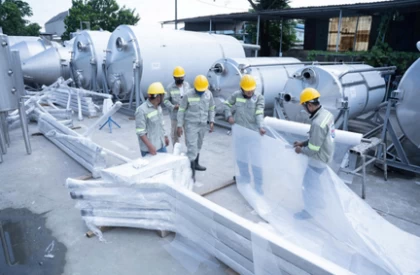
After the design drawings are complete, the raw stainless steel material is prepared. The cutting process is the first step in shaping. With the support of modern technologies such as laser cutting, plasma cutting, bending machines, and CNC punching machines, stainless steel sheets are cut and shaped with high precision, ensuring perfect interlocking of components for the assembly and welding stage. Precision at this step is the foundation for the quality of the entire product.
Specialized Welding & Ensuring Integrity
Welding is one of the most critical and complex stages in stainless steel Fabrication & Manufacturing. TIG (Tungsten Inert Gas) welding is often preferred for stainless steel to ensure clean, smooth, strong welds that are resistant to oxidation. Welders not only require high skill but also experience in handling different types of stainless steel, controlling temperature, and shielding gas to avoid distortion or reduced corrosion resistance of the material. For pressure equipment, welds must be thoroughly inspected using methods such as X-ray and pressure testing to ensure absolute integrity.
Surface Finishing & Quality Control
After welding and assembly, the equipment undergoes a surface finishing stage. This includes grinding and polishing to remove excess weld material, smooth the surface to meet hygiene and aesthetic requirements, and enhance corrosion resistance. Especially for industries like pharmaceuticals, surfaces must achieve a mirror polish to ensure there are no microscopic gaps. Finally, the product undergoes a stringent quality control process for dimensions, functionality, pressure resistance, durability, and other standards before delivery.
The Place Where Sustainable Solutions Are Created
Fabrication & Manufacturing is not just a technical process; it is a commitment to delivering comprehensive and sustainable solutions to customers. From the seemingly most complex requirements, a professional partner can transform them into efficient, safe, and long-lasting stainless steel equipment. This involves investment in technology, in training engineers and skilled workers, so that each product is not just a metal structure but a testament to the excellence of the manufacturing industry. By combining technical consulting, specialized design, meticulous fabrication, and after-sales installation and maintenance services, we not only build equipment but also foster trust and peace of mind for critical production activities.
Contact Information:
- Hoang Tam
- Address: Lot L1, Street No. 8, Le Minh Xuan Industrial Park, Tan Nhat Commune, Ho Chi Minh City, Vietnam
- Hotline: 0903390069
- Phone: 0933 049 069
- Email: contact@hoangtamsse.com
- Website: hoangtamsse.com